
Modern Workplace Trends Office Interior Designers Are Using in 2026
Walk into almost any Sydney office fitout finished in the last year and the shift is obvious. The beige cubicle farm is gone, and so is the novelty ball pit that briefly stood in for company culture. What's replaced them is something quieter and more considered, spaces built around how people actually work, not how a mood board says they should look.
Texture Is Doing the Talking
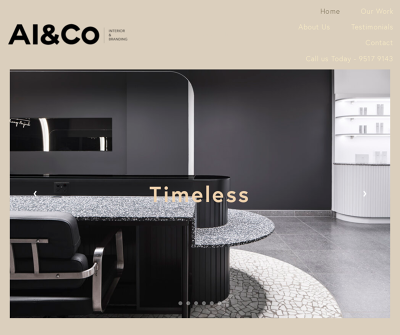
Flat, glossy surfaces are losing ground to ribbed glass, timber slats and boucle upholstery. This isn't decoration for its own sake. Different textures now signal how a zone should be used, softer materials for focus pods, rougher or more layered finishes near collaboration tables. Acoustic panels have also grown up, doubling as design features rather than sitting there as an afterthought bolted to a ceiling. Sound, touch and even scent are becoming part of the brief when clients approach office interior designers in Sydney, which says a lot about how far the industry has moved from purely visual thinking.
Furniture With Presence
Chunky lounge chairs and oversized sofas are having a moment, and the reasoning behind them is practical rather than trendy for the sake of it. These pieces invite people to sit down and stay, something a hard bench near reception never managed. Boardrooms and breakout corners are picking up bolder, sculptural seating that reads as intentional, not leftover from a showroom clearance.
Modularity Over Mass
Rigid floorplans have fallen out of favour as businesses juggle hybrid attendance week to week. Reconfigurable zones, movable partitions and furniture that shifts between meeting mode and quiet-focus mode are now standard requests. A tenancy with 40 desks might only see 25 people on a Tuesday, so flexibility isn't a nice-to-have anymore, it's what keeps a fitout relevant beyond its first six months.
Sustainable Materials Without the Compromise
Low-VOC finishes, reconditioned furniture components and joinery designed for eventual disassembly are showing up more often in project specs. Clients are asking pointed questions about embodied carbon before they ask about paint colour, which would have seemed unusual five years back.
Scaling Design for Smaller Footprints
Not every business occupies a full floor, and tight tenancies need a sharper approach to layout, storage and daylight. Small office interior designers in Sydney are increasingly working with teams of ten to twenty, where every square metre has to earn its place without the space feeling cramped or corporate.
None of this points to one single "look" for 2026. It points to offices being planned around actual behaviour, comfort and longevity rather than a passing aesthetic that dates within a year. For learn more https://www.alandcohausofdesign.com/office-interior-designers-sydney/
Texture Is Doing the Talking
Flat, glossy surfaces are losing ground to ribbed glass, timber slats and boucle upholstery. This isn't decoration for its own sake. Different textures now signal how a zone should be used, softer materials for focus pods, rougher or more layered finishes near collaboration tables. Acoustic panels have also grown up, doubling as design features rather than sitting there as an afterthought bolted to a ceiling. Sound, touch and even scent are becoming part of the brief when clients approach office interior designers in Sydney, which says a lot about how far the industry has moved from purely visual thinking.
Furniture With Presence
Chunky lounge chairs and oversized sofas are having a moment, and the reasoning behind them is practical rather than trendy for the sake of it. These pieces invite people to sit down and stay, something a hard bench near reception never managed. Boardrooms and breakout corners are picking up bolder, sculptural seating that reads as intentional, not leftover from a showroom clearance.
Modularity Over Mass
Rigid floorplans have fallen out of favour as businesses juggle hybrid attendance week to week. Reconfigurable zones, movable partitions and furniture that shifts between meeting mode and quiet-focus mode are now standard requests. A tenancy with 40 desks might only see 25 people on a Tuesday, so flexibility isn't a nice-to-have anymore, it's what keeps a fitout relevant beyond its first six months.
Sustainable Materials Without the Compromise
Low-VOC finishes, reconditioned furniture components and joinery designed for eventual disassembly are showing up more often in project specs. Clients are asking pointed questions about embodied carbon before they ask about paint colour, which would have seemed unusual five years back.
Scaling Design for Smaller Footprints
Not every business occupies a full floor, and tight tenancies need a sharper approach to layout, storage and daylight. Small office interior designers in Sydney are increasingly working with teams of ten to twenty, where every square metre has to earn its place without the space feeling cramped or corporate.
None of this points to one single "look" for 2026. It points to offices being planned around actual behaviour, comfort and longevity rather than a passing aesthetic that dates within a year. For learn more https://www.alandcohausofdesign.com/office-interior-designers-sydney/
 Facebook
  Instagram
  Youtube
  LinkedIn
  TikTok
  X (Twitter)
  Reddit
  SnapChat